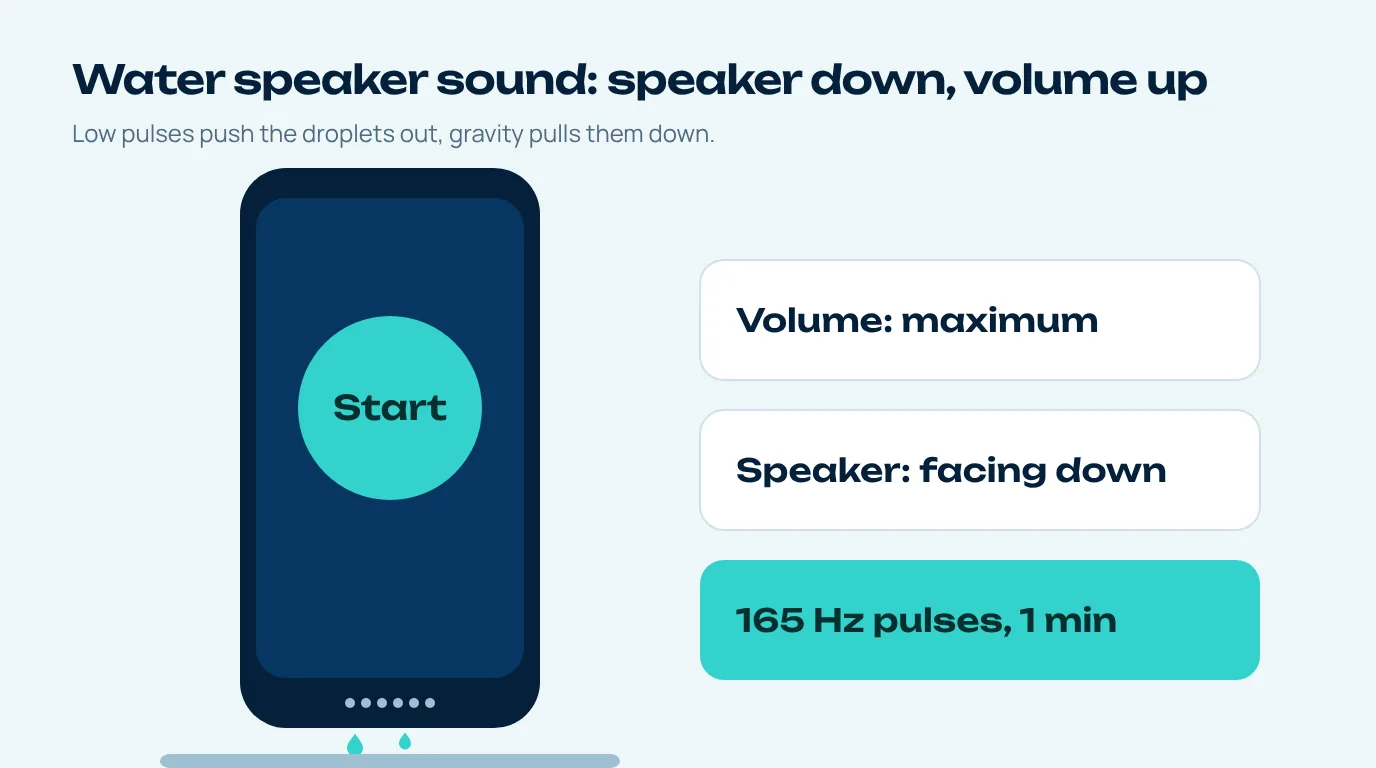
A water speaker sound is just a low tone (165 Hz by default) played loud, in short bursts. Every burst throws the speaker diaphragm far enough forward to break the film of water stretched across the grille, so the droplets get pushed out instead of sitting there drying for hours. Give it a minute, wipe the grille, have a listen.
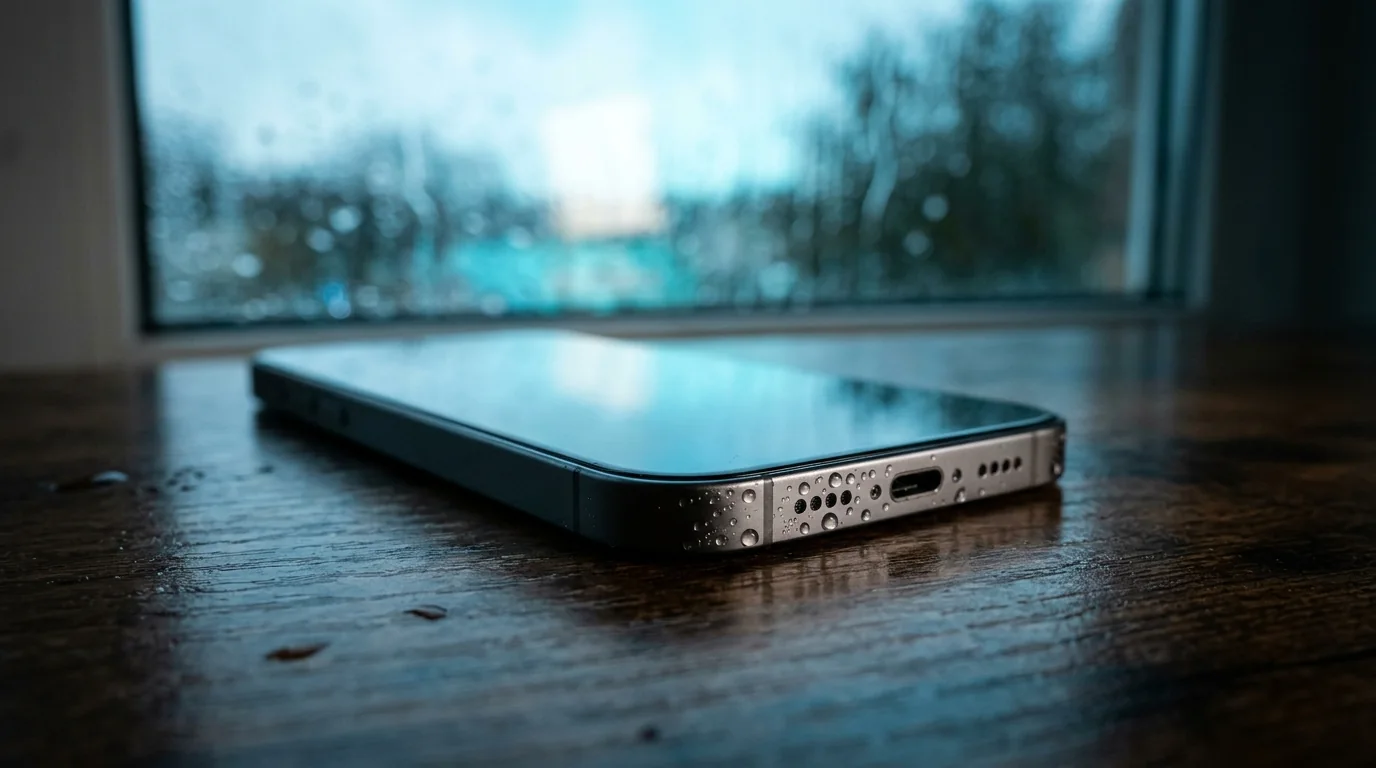
Searched "water speakers" because your music suddenly sounds thin and far away after a splash? You're in the right spot. That flat, papery sound nearly always means there's a thin layer of water on the speaker mesh, or tucked into the little chamber behind it. The tool at the top plays a water speaker sound made for exactly this. It's the same engine as our main water eject tool, just opened straight on the pulse pattern so you can hit Start and go.
What a water speaker sound actually does
The speaker in your phone is basically a miniature version of the ones in your living room. There's a coil sitting in a magnetic field, current goes through it, and the diaphragm stuck to it moves in and out and pushes air about (Wikipedia's loudspeaker page has a decent diagram of the parts). Water sitting in front of that diaphragm adds weight and gets in the way of the air, and that's your muffled sound right there.
Low notes give the diaphragm more time on each swing, so it travels further every stroke. Play one loud and in short bursts and what you get is a string of little air kicks aimed right at the water. What's holding that water in place is mostly surface tension, and those kicks are usually enough to snap it. Once the film goes, the droplets either drop out or get flung through the holes.
How to play the speaker water sound properly
It's not complicated, but two little details make all the difference. One, the volume has to be right at the top. Turn it down and the diaphragm hardly moves, so all you're doing is humming politely at a wet grille. Two, the speaker opening needs to face the floor, so gravity's pulling the same way the air's pushing.
iPhone owners, switch Silent mode off first, because the browser can stay quiet otherwise and you'll think it's broken. Pull off any case that covers the bottom edge as well. Then press Start, rest the phone on its side over a towel (or just hold it loosely) and leave it be until the timer runs out. I know it's tempting to stop the moment it sounds a bit better. Don't. The last few drops usually come out near the end.
If you have a phone with two speakers (a bottom speaker plus the earpiece acting as a second speaker), turn the phone around for a second run with the top edge pointing down. That gives the earpiece the same help.
Which water sound speaker pattern to choose
There are four patterns in there. Same speaker every time, they just shove it around in different ways.
| Pattern | How it sounds | When to use it |
|---|---|---|
| Water remove | Deep hum in short bursts | First run for any wet speaker |
| Vibration | Rough buzz that throbs | When the speaker rattles or fizzes |
| Deep clean | Rising sweep, then bursts | Second run if the first one helped only partly |
| Dust | High sweeping whistle | Once dry, to shake loose fine dust |
For most people the first pattern is all they need. The water vibration sound page explains the buzz pattern in more detail, including why a rattling speaker sometimes responds better to it.
Signs the water speaker sound worked
Often you can hear it happening mid-run, because the hum gets fuller and a touch louder as the grille clears. Afterwards, put on a voice recording or a song you know really well. Voices are the best test, honestly, since that muffled under-a-blanket thing is really obvious on speech.
A few signs that some water is still inside are a faint crackle on loud passages, a fizzing sound on bass notes, or one speaker sounding quieter than the other. The water sound test page plays left, right and a full frequency sweep so you can check each speaker on its own.
What the sound can't fix
Worth being upfront about what it can't do, too. A speaker sound only shifts water that's sitting in front of the speaker. The charging port, the microphone holes, anything inside the body of the phone, it won't touch any of that. For those, the official advice from Apple is to tap the phone gently with the connector facing down, leave it somewhere with airflow, avoid heat sources and avoid pushing cotton swabs into the port (Apple Support). Samsung says moisture in the port usually evaporates within one to two hours and that nothing should be inserted into it (Samsung UK).
And if the liquid wasn't plain water, rinse with a little fresh water first. Sugar or salt left behind after the water evaporates can stick to the mesh and keep the sound dull long after the phone is dry.
Water speaker sound vs drying the phone in rice
Everyone's heard the rice trick. Thing is, the phone makers don't recommend it. Apple's support guidance tells iPhone owners not to put a wet phone in rice because small particles of rice could damage it, a point that was widely reported in early 2024 (Euronews). Rice also does nothing for water held inside a speaker grille, since it can't reach it.
So here's the order I'd go with. Sound first to clear the speaker, then let the whole phone air dry somewhere with a bit of a breeze, and only plug it in once it's properly dry.
Questions people ask
What is a water speaker sound?
It's a low tone, usually around 165 Hz, played loudly in short bursts. The bursts make the speaker diaphragm move far enough to push trapped droplets out through the grille.
How many times should I play it?
One run of a minute is usually enough. If the sound is still muffled, run it once more or switch to the vibration or deep clean pattern. If nothing changes after three runs, the issue is probably not water in the grille.
Can a speaker water sound fix water inside the phone?
No. It only moves water sitting in front of the speaker. Water in the port or inside the body needs time and airflow to dry, and the phone should not be charged with a cable until it is dry.
Why does my speaker still crackle after the sound?
A crackle often means a small droplet is still touching the diaphragm. Run the vibration pattern, then leave the phone speaker-down on a cloth for an hour and test again.
Does this work on water speakers like Bluetooth speakers?
Yes, if the speaker is connected and playing the sound. Many rugged Bluetooth speakers have a grille that holds water the same way, and the same low pulses can help clear it.